
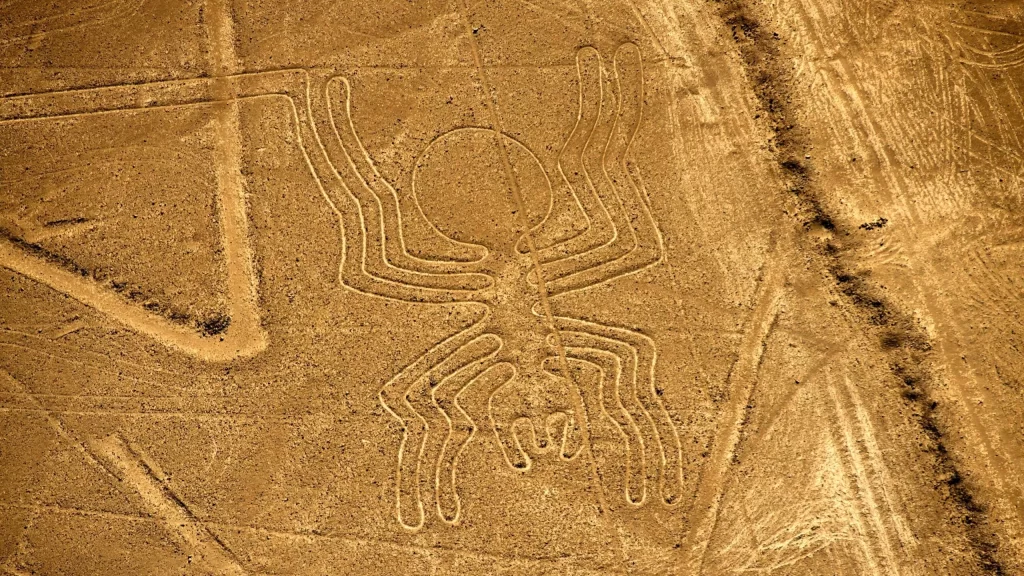

Among the many wonders of Peru, the Nazca Lines stand out as one of the most mysterious and fascinating sights. These massive geoglyphs, etched into the arid landscape of the Nazca Desert, have intrigued archaeologists, scientists, and visitors for decades. Stretching over 200 square miles, the lines form intricate designs of animals, plants, and geometric shapes, visible only from above.
What Are the Nazca Lines?
The Nazca Lines are a series of large ancient geoglyphs that date back to between 500 BCE and 500 CE. They were created by the Nazca people, who removed the top layer of reddish rocks to reveal the lighter ground beneath. The purpose behind these massive drawings remains a mystery, with theories ranging from astronomical markers to religious or ceremonial uses. Learn more about the theories behind the Nazca Lines at Ancient History Encyclopedia.
Famous Geoglyphs to See
Some of the most famous geoglyphs include:
- The Hummingbird: Measuring 320 feet long, this delicate bird design is one of the most iconic figures.
- The Monkey: With a coiled tail, this 300-foot-long design captures the curiosity of many.
- The Spider: A symbol believed to have astronomical significance, the spider stretches over 150 feet.
- The Condor: This majestic bird design, with a wingspan of over 400 feet, is one of the largest.
You can explore more about these fascinating designs and their possible meanings at Smithsonian Magazine.

How to Visit the Nazca Lines
Best Ways to See the Lines
The best way to fully appreciate the Nazca Lines is from the air. Several local companies offer small plane flights that give visitors an aerial view of the intricate designs. The flights last about 30 minutes, allowing you to observe many of the geoglyphs from above. If you prefer a ground-level experience, there are also observation towers along the Pan-American Highway that provide a partial view of some of the figures, like the Tree and the Hands.
For more detailed information about booking flights and tours, visit Responsible Travel.
When to Visit
The Nazca Desert is one of the driest places on Earth, with little rainfall year-round. This makes it possible to visit the Nazca Lines in any season. However, the best time to visit is during the Peruvian winter (May to September), when temperatures are cooler, and skies are clearer, offering better visibility for flights.
Getting to Nazca
Nazca is located about 280 miles south of Lima. Most visitors travel by bus from Lima, which takes around seven hours. Alternatively, you can join a guided tour that includes a flight over the Nazca Lines. Learn more about transportation options at Peru for Less.
Theories Behind the Nazca Lines
The Nazca Lines have sparked a range of theories, from scientific to the wildly speculative. While their exact purpose remains unclear, here are some of the leading ideas:
- Astronomical Calendar: Some researchers believe that the lines were used as an astronomical calendar, marking celestial events such as solstices or planetary movements.
- Religious or Ceremonial Pathways: Others propose that the lines were part of religious rituals or processions, leading worshippers to sacred sites.
- Water Worship: Given the arid environment, some experts suggest that the lines may have been related to water worship, intended to bring rain or celebrate the gods of water.
More in-depth research on these theories can be found at Brittanica.
Tips for Your Visit
Practical Recommendations
- Book Early: If you plan to take a flight over the Nazca Lines, book your tickets in advance, especially during peak tourist season (June-August).
- Prepare for Motion: The small planes that fly over the Nazca Lines often experience turbulence, so it’s best to be prepared if you’re prone to motion sickness.
- Bring Sun Protection: The desert sun can be intense, so bring sunscreen, a hat, and sunglasses to protect yourself during your visit.
Respect the Site
The Nazca Lines are a delicate and protected UNESCO World Heritage Site, so it’s important to respect the area and follow guidelines to ensure these ancient geoglyphs are preserved for future generations.

 English