
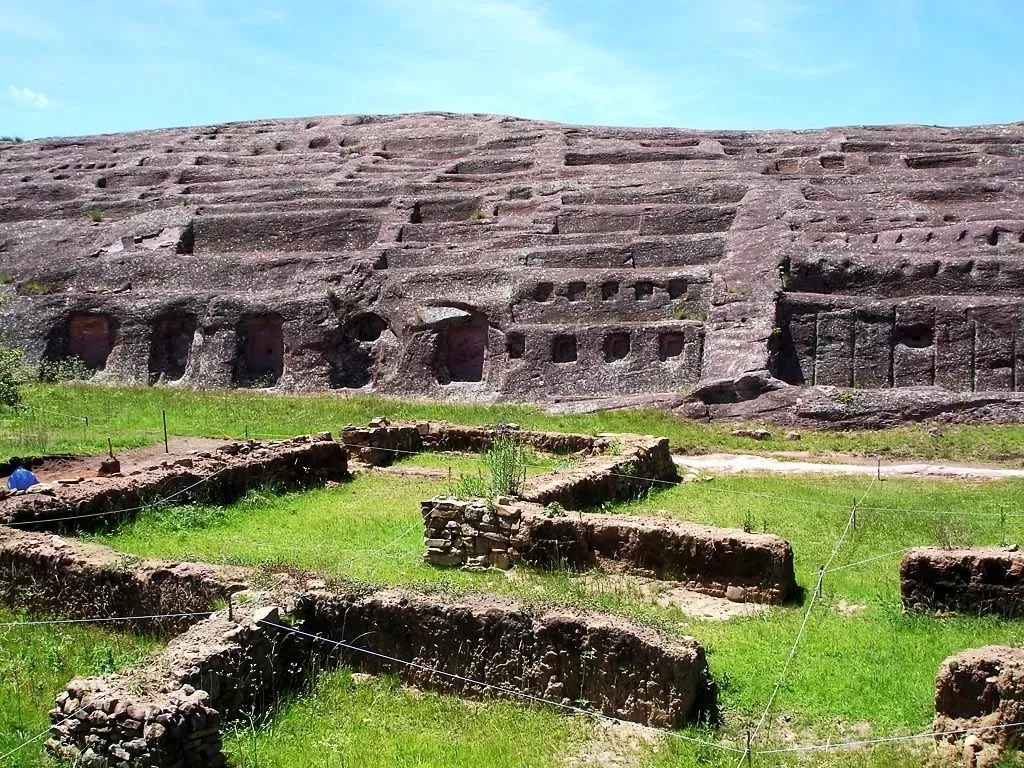

Bolivia is home to many natural and cultural wonders, but one of its most fascinating and lesser-known treasures is the Samaipata Ruins. Situated on the eastern slopes of the Bolivian Andes, the mysterious El Fuerte de Samaipata ruins hold a rich history, offering visitors a unique glimpse into the ancient civilizations that thrived in the region. Though travelers often overlook Samaipata in favor of more famous South American archaeological sites, this hidden gem provides an unforgettable experience for those seeking something off the beaten path.

What Makes the Ruins of samaipata Special?
Why Should You Visit the ruins of Samaipata?
Samaipata, a UNESCO World Heritage Site, is a massive archaeological complex that combines elements of different cultures, including the Inca Empire, Chane people, and Spanish colonialists. Its most prominent feature is a huge sandstone rock, intricately carved with mysterious symbols, figures, and niches. Archaeologists are still debating its original purpose, whether it was a ceremonial site, a fortress, or an observatory.
- Ancient Architecture and Art: The site’s centerpiece, a massive carved rock known as La Roca, measures over 200 meters and ranks among the largest carved stoneworks in the world. The carvings on the rock depict everything from serpents and pumas to geometric patterns, believed to have religious or astronomical significance.
- Mysterious History: The site’s combination of cultures is intriguing. It was first occupied by the Chane people, later expanded by the Incas, and eventually used by the Spanish conquistadors. This layered history makes Samaipata a unique place to explore for anyone interested in archaeology or ancient civilizations. Read about the Inca influence in Bolivia on the Smithsonian Magazine.

What to Expect During Your Visit
1. El Fuerte de Samaipata
The main attraction, El Fuerte, is a large rock platform that is thought to have been a ceremonial site. The site offers breathtaking views of the surrounding valleys and mountains, making it a perfect spot for visitors to reflect on the ancient civilizations that once thrived here.
2. Mystical Symbolism and Astronomy
The carvings on the sandstone rock are more than just decorative; many scholars believe they had astronomical functions. The Incas were known for their advanced understanding of astronomy, and it’s possible that Samaipata played a role in observing celestial events.
3. Exploring the Surrounding Area
Samaipata is located near the Amboró National Park, a biodiversity hotspot where the Amazon, Andes, and Chaco ecosystems converge. Visitors can combine a trip to the ruins with a hike through the national park, where you’ll encounter rare wildlife, tropical plants, and stunning landscapes. Read more about the diverse ecosystems of Bolivia on WWF’s Bolivia page.

Best Time to Visit Samaipata
The best time to visit Samaipata is during the dry season, which runs from May to September. During this time, you’ll enjoy pleasant weather and clear skies, perfect for exploring the ruins and hiking through the nearby forests.
Recommendations for Your Trip
- Bring a Guide: While the ruins are impressive on their own, a knowledgeable guide can explain the historical and cultural significance of the site, as well as the local flora and fauna.
- Pack for Adventure: Be sure to wear comfortable walking shoes and bring sunscreen, water, and a hat to protect yourself from the sun. The site’s high altitude and exposed location mean it can get hot during the day.
To learn more about planning a trip to Samaipata and the region’s archaeological significance, you can visit the UNESCO World Heritage Center.

 English