
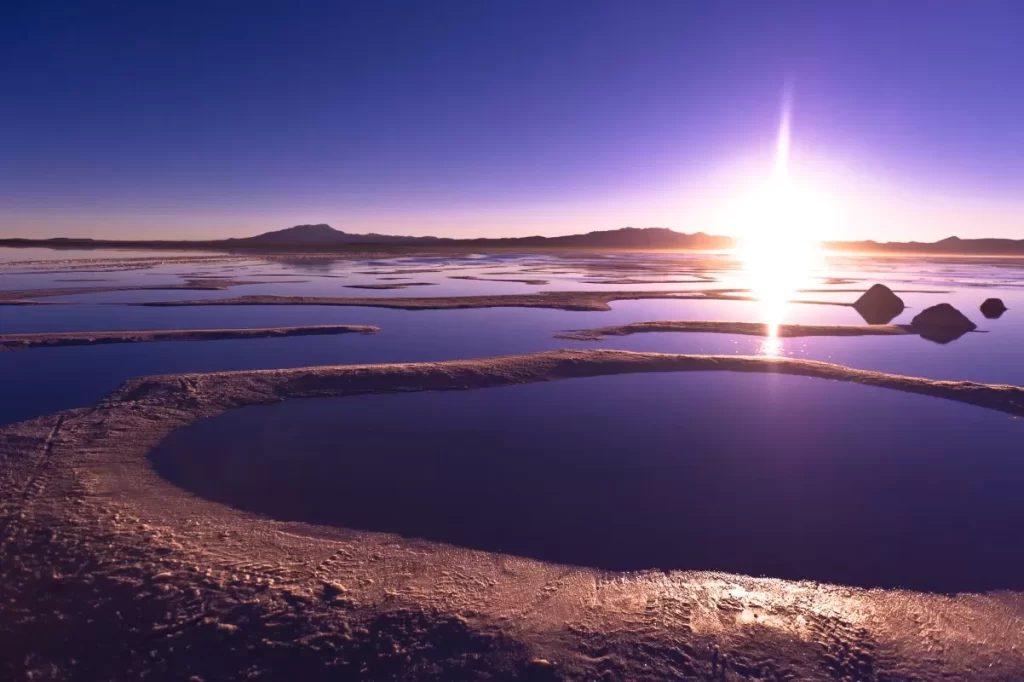

Bolivia is home to one of the most breathtaking natural wonders in the world: Salar de Uyuni, the largest salt flat on the planet. Spanning over 10,000 square kilometers (3,900 square miles), this otherworldly landscape transforms into a vast mirror during the rainy season, creating one of the most awe-inspiring sights on Earth.

What Is Salar de Uyuni?
Located in southwest Bolivia, is a remnant of prehistoric lakes that evaporated long ago, leaving behind an expansive salt crust. This surreal destination is made up of a flat, endless white expanse, with only a few landmarks such as cacti-covered islands and distant mountain peaks breaking the horizon. Learn more about its formation at National Geographic.
Why Visit Salar de Uyuni?
This fantastic place offers one of the most unique experiences in the world. Here’s why you should visit:
- Mirror Effect: During the rainy season (December to April), the salt flats become covered in a thin layer of water, creating a giant mirror that reflects the sky. The resulting optical illusion makes it seem as if you’re walking on the clouds—a photographer’s dream!
- Endless Salt Desert: During the dry season, the salt flats take on a hexagonal pattern created by the natural crystallization of the salt, offering a stunning geometric view.
- Unforgettable Sunsets: The reflection of the setting sun on the water creates a mesmerizing display of colors. Whether you visit during the rainy or dry season, the sunsets over Salar de Uyuni are nothing short of magical.
Find more breathtaking travel photos on BBC Travel.
Activities
Visitors can enjoy a variety of activities that showcase the natural beauty and unique terrain of the salt flats:
1. Photography
The vast, reflective surface of Salar de Uyuni creates the perfect backdrop for surreal and creative photos. Take advantage of the mirror effect to capture stunning optical illusions, or photograph the hexagonal salt formations during the dry season.
2. Stargazing
Due to its high altitude and remote location, Salar de Uyuni offers some of the clearest night skies in the world. Imagine standing on a giant mirror under a sky full of stars—a truly unforgettable experience.
3. Visit Incahuasi Island
In the middle of the salt flats, Incahuasi Island is a rocky outcrop covered in towering cacti, some of which are over 1,000 years old. This island offers panoramic views of the salt flats and is a must-visit for anyone exploring the area.
4. Explore the Train Graveyard
Just outside the town of Uyuni, you can find a train graveyard where old, rusted locomotives and train cars lie abandoned. These trains were once used to transport minerals, and now they serve as a haunting reminder of Bolivia’s industrial past.
Find out more about Salar de Uyuni tours and activities at Lonely Planet.

When to Visit
The best time to visit depends on what kind of experience you’re looking for:
- Rainy Season (December to April): Visit during these months if you want to experience the mirror effect. However, keep in mind that some areas may be inaccessible due to flooding.
- Dry Season (May to November): The salt flats are more accessible during the dry season, and the weather is more predictable. You can walk on the salt flats and see the unique hexagonal patterns.
For more information on the best time to visit, check the weather patterns at Weather.com.
Tips for Visiting Salar de Uyuni
- Pack Layers: The temperature in Salar de Uyuni can vary drastically between day and night, so be sure to pack warm clothing, even in the dry season.
- Bring Sunglasses: The sun reflecting off the white salt can be blinding, so it’s essential to wear sunglasses to protect your eyes.
- Stay Hydrated: The high altitude and dry environment can quickly lead to dehydration, so carry plenty of water with you.
Conclusion
Salar de Uyuni is one of Bolivia’s most stunning natural wonders and an unmissable destination for travelers seeking unique and awe-inspiring experiences. Whether you’re walking across the mirror-like surface during the rainy season or exploring the vast salt desert during the dry months, this destination promises to leave a lasting impression.

 English